
If your legs itch under compression socks, start with what changed and what to ask about the pair you are wearing.
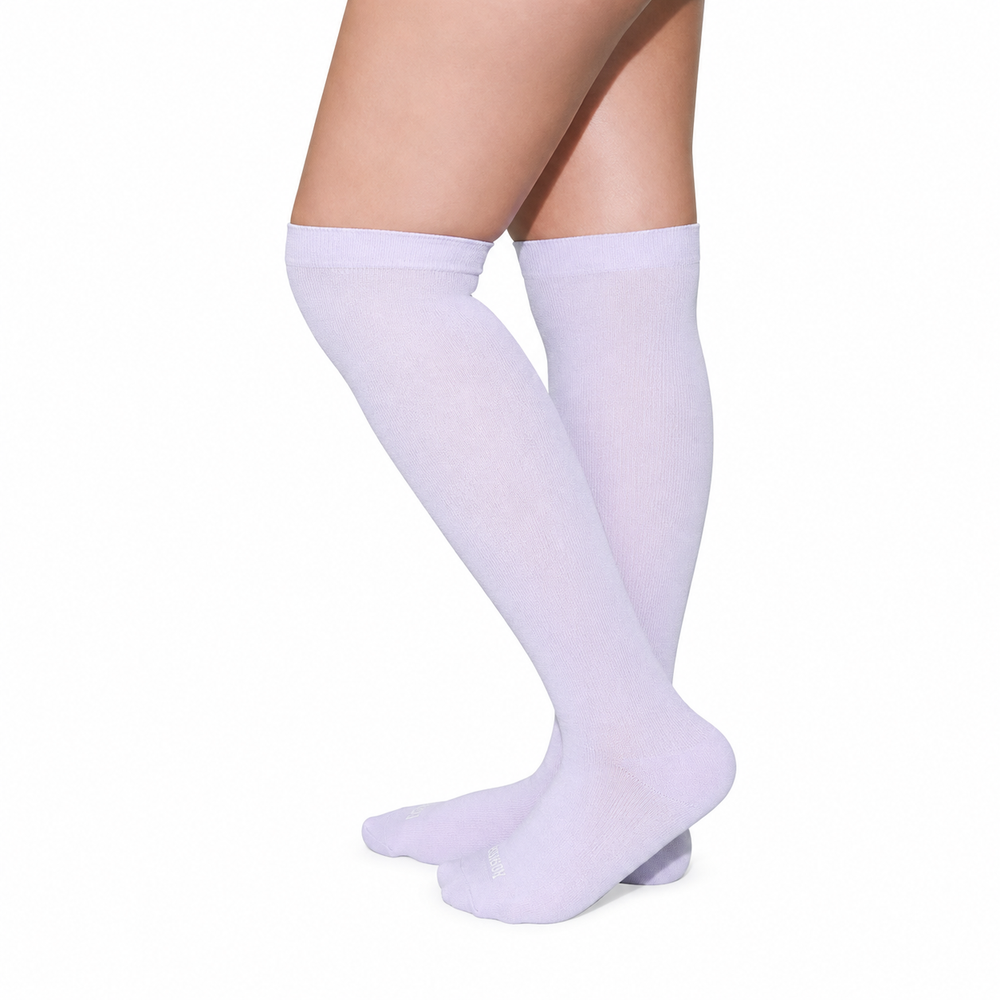
Why might compression socks feel itchy?
Dry skin is one possibility. The American Academy of Dermatology explains that very dry skin can itch intensely and that itching can have more than one cause.
Skin products may also matter: a Northern Care Alliance NHS vascular leaflet warns that perfumed lotions, soaps, and creams can irritate skin.
Neither fact identifies the cause of your symptoms. Note any recent changes, but do not select a cream or replacement sock on that assumption. This guide helps with reporting the problem, not diagnosing it.
Irritation and allergy are different questions
It is tempting to blame the fabric when the itch sits exactly under a sock. That timing is useful information, but it does not identify the cause. A 2020 international consensus statement by Rabe and colleagues distinguishes skin irritation from true allergic reactions to compression materials. Its review describes the latter as uncommon, rather than treating every itchy reaction as an allergy. This is clinical literature about compression treatment, not a test of LeafSock or an assessment of your skin.
The distinction matters because “try a different color” or “buy a softer pair” does not answer whether the problem involves your skin, a product used on it, or the garment. The paper also recommends checking fit and application. It does not give readers a way to rule out a skin problem from appearance alone. Its industry-funded editorial support is disclosed in the publication; it should not be presented as independent proof of a brand's performance.
What a dermatologist can check that a photograph cannot
The American Academy of Dermatology explains patch testing as a way a dermatologist may investigate a suspected skin allergy. Unlike a skin-prick test for immediate reactions, it examines delayed skin reactions. That is a professional investigation, not a reason to test lotions or sock fabrics against irritated skin yourself.
For the appointment, take the information already available: the garment label, the names of laundry and skin products, and any instructions you were following. “New detergent, same socks” and “new socks, same detergent” are different histories worth describing. Neither is proof of causation. If a product name is missing, send the request anyway; the information helps the conversation but should not become another obstacle to asking for care.
When should you ask for help?
New wounds or skin changes deserve prompt contact with your clinician. The Kingston and Richmond patient instructions specifically include new redness and itching in their advice to contact a doctor or nurse straight away.
That is different from collecting a few days of notes first. Send the information you already have; an unfinished checklist is not a reason to delay.
For people following an existing skin-care plan, the Northern Care Alliance leaflet also says to contact a nurse or doctor if itching or soreness continues. This does not cancel the prompt-contact advice for a new skin change.
While you are asking for advice: if the stockings are uncomfortable and you are unsure about continuing, the vascular leaflet advises removing them and contacting your healthcare professional. Ask that clinician what to do next; this is not an instruction to abandon prescribed treatment.
For a new itch without a clear answer about what to do with the stockings, include that immediate wearing question when you contact your prescribing clinician or primary-care clinician. This article cannot make that individual decision for you.
Notice the change before naming the cause
Describe a location, sensation, or visible change rather than naming a condition. These are examples of wording, not patient cases:
| More useful to report | Conclusion to leave open |
|---|---|
| “The itching is around my left ankle.” | “I must be allergic to the socks.” |
| “I started using a different laundry product.” | “The laundry product caused this.” |
| “The skin looks different here; I cannot describe the mark.” | A medical name you are unsure of. |
Age does not settle the question either. The AAD's guidance for people in their 60s and 70s describes dry, irritated skin in those decades; it does not explain every new itch in an individual person.
Use a skin-change note, not a self-diagnosis checklist
Copy the fields you can answer into your phone. Contact your clinician promptly about new skin changes; do not wait to complete this note.
| What to record | What to write |
|---|---|
| How to use this note | Record only what you already know. Do not delay help or put the socks back on to reproduce symptoms. This is not a safety test. |
| Where and when | Which leg or part of the foot; when you first noticed the change. “Not sure” is a valid answer. |
| What changed | Describe what you can see and feel, in your own words. |
| Recent products | Different socks, laundry products, or skin products; names if available. A change does not prove a cause. |
| Current garment and care | Exact pair or label; whether prescribed; instructions already received. |
| Questions needing an answer | What should I do about my skin? What should I do about wearing this pair now? |
Keep the questions about the skin and the current garment separate. A reply about one may not answer the other.
Make the conversation specific
Message template:
Send what you know; an incomplete note is enough to ask for help. For persistent or unexplained itching, the AAD recommends a dermatologist to identify the cause. You do not need to arrive with a diagnosis.
The bottom line
Report new skin changes promptly. Describe what happened, identify the pair you are wearing, and ask for clear advice about both your skin and the stockings. Do not wait to collect a longer history or recreate the itch.
Frequently asked questions
Does itching mean the socks are working?
Do not treat itching as a reason to push through. Report new itching to your clinician rather than deciding it is a sign that the socks are helping.
Can dry skin explain itching under compression socks?
It is one possible explanation. The AAD identifies very dry skin as a cause of itching, but that does not diagnose the cause of your particular symptoms.
Does being around 60 explain the itching?
Not by itself. Age-related skin guidance provides context, not an explanation for every new skin change; describe the change and ask for advice rather than assuming it is inevitable.
Should I buy another pair before asking for advice?
You do not need to buy something to describe a problem. If the stockings were prescribed, include that information and ask what to do about the current garment rather than treating a replacement purchase as medical advice.
Product image reference
