
You have worked out how to get your socks on. Now the weather is warm, and getting dressed feels like a different problem.
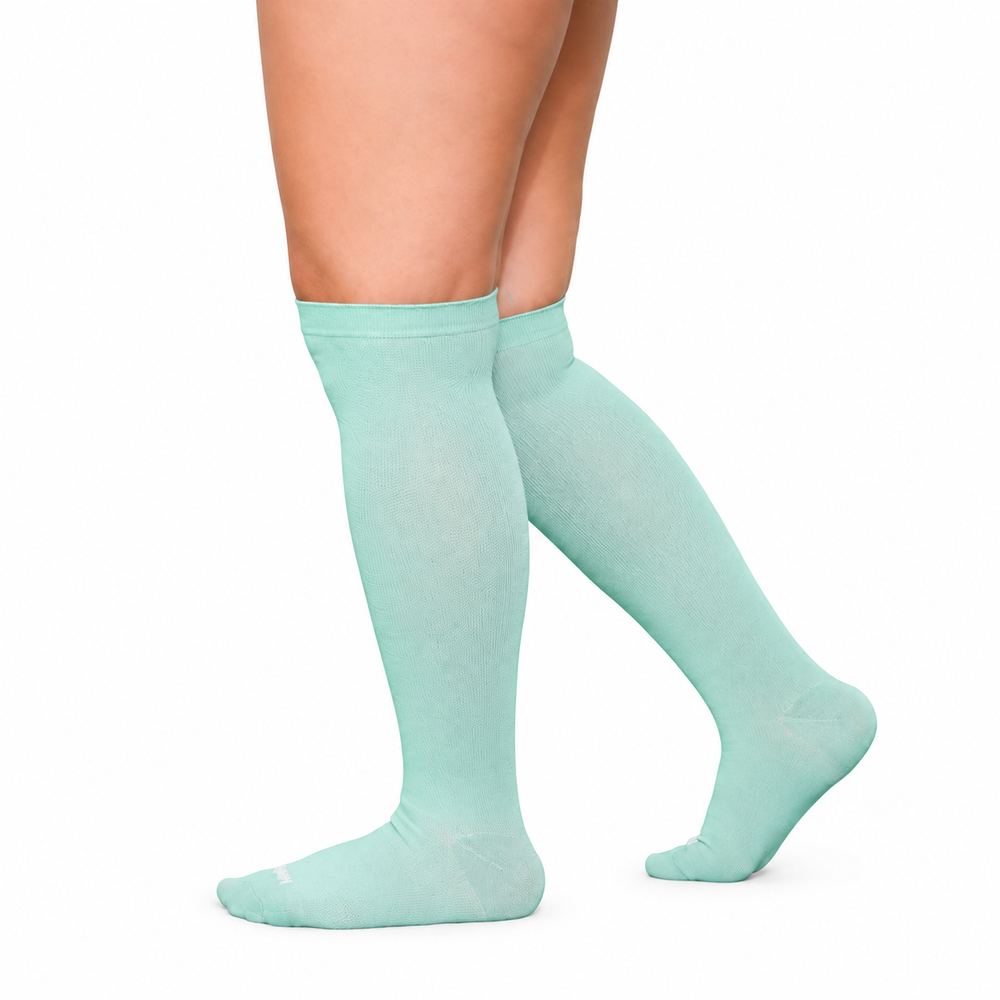
Is summer discomfort something you have to put up with?
No routine should be treated as a reason to push through symptoms. In advice for people with varicose eczema, the NHS acknowledges hot-weather discomfort and advises discussing discomfort, poor fit, or difficulty putting stockings on with a doctor.
That is guidance for a particular patient group, not reassurance that every warm or uncomfortable sensation is harmless. It does not prove one fabric or toe style will feel cooler.
First separate “I dislike this outfit” from “the stockings themselves feel uncomfortable.” The first is a clothing decision. The second belongs with the garment and care questions below.
What the research says about the summer burden
Feeling hot is not simply a failure to organize yourself. In a 2024 Dutch interview study, 19 compression-hosiery users described heat among the difficulties of wearing their garments. These interviews identify experiences worth addressing; they do not measure how often every wearer feels hot or establish a cooling product.
There is also a reason to resist a single “summer fix.” A 2021 scoping review by Bar, Brandis and Marks included 69 papers on adherence in people with chronic venous insufficiency or venous leg ulcers. Definitions and measurements varied, and no single intervention consistently improved adherence. Approaches addressing several barriers appeared promising, but stronger trials were needed. The review did not test this planner or tell readers to change prescribed wear.
For your next outing, that means being precise about the obstacle. A clean pair not being ready, an unavailable helper, and discomfort while wearing are not interchangeable problems. Another sock purchase would not automatically solve any of them.
Ask what a “cooling” claim actually measures
Before paying for a summer promise, look for an answer beyond a fiber name or a photograph of someone outdoors. Was the exact garment tested? Was the outcome a laboratory measurement, or did people report feeling cooler while wearing it? What was it compared with, and under which conditions?
Those are questions for evaluating a claim, not evidence that a particular pair works or fails. A useful product answer should tell you what was measured and what remains unknown. Meanwhile, changing a skirt, removing an optional outer layer, or preparing an alternative outfit is a clothing choice you can make without inventing a new compression schedule. Keep the prescribed garment and its instructions separate from the outfit decision.
Separate outfit choices from treatment choices
Plan one actual outing, not a new wearing schedule. Use this table to identify which problem needs solving:
| The practical problem | What to do with the plan |
|---|---|
| The outfit is not what you want | Choose another dress, skirt, or pair of pants you already own. Change the clothes, not the stocking's position. |
| The usual pair will not be ready | Check its own washing and drying instructions before the outing; do not improvise a heat-drying shortcut or substitute a different prescribed garment. |
| Your usual help is unavailable | Confirm the arrangement with the person who helps you; ask the fitting service about an unresolved assistance problem. |
| The stockings feel uncomfortable or the fit seems wrong | Ask the clinician responsible for the stockings. For the symptoms listed below, follow the removal-and-contact advice rather than completing a planner first. |
These are preparation choices, not cooling treatments. MedlinePlus directs questions about the appropriate type of compression stocking to a healthcare provider. Keep changes to a prescribed garment or wearing schedule out of the outfit plan.
Make getting ready less complicated
Set out the pair you normally use, its instructions, and your chosen clothes. Check the care label early enough to know whether the garment will be ready; use its instructions rather than borrowing wash temperatures or drying methods from a summer tip list.
Guy's and St Thomas' NHS tells its patients to have dry skin and allow any lotion to be absorbed before putting stockings on, and not to fold or wrinkle them while worn. Follow the directions for your pair and care plan; this is not a recommendation to start a lotion or powder.

Keep a short comfort-and-routine note
Use one short note for the outing. It should record a plan, not create a new set of chores.
| Field | Your entry |
|---|---|
| Occasion and clothes | Where you are going; an outfit and a clothing backup already in your wardrobe. |
| Garment readiness | Which pair; whether it is ready under its own care instructions; unresolved laundry question, if any. |
| Existing instructions and help | Where the instructions are kept; the usual demonstrated help and agreed contact. |
| Problem needing advice | What is uncomfortable, unclear, or difficult. Do not delay help or continue wearing uncomfortable stockings to finish the note. |
Example outing plan: Lunch with a friend; the cream dress already in the wardrobe, with loose-cut pants as an alternative outfit. Check the current pair against its care label the evening before; keep the existing wearing instructions with it. Confirm the usual helper if help is part of the routine. This example changes preparation and clothing, not prescribed wear or expected body temperature.
When describing discomfort, write “I felt too warm in this outfit,” not “this fiber caused it.” Record what you already noticed; no week-long log or repeat trial is needed to ask for advice.
What if the routine still does not work?
Do not treat symptoms as a clothing problem. Cleveland Clinic advises removing compression socks that feel uncomfortably tight. If you notice pain, numbness, tingling, skin discoloration or damage, or worsening swelling, remove them and call your healthcare provider.
For other unresolved discomfort or fitting difficulty, ask about the problem rather than redesigning your prescribed plan. A change of season does not answer which garment or routine is appropriate for you.
Message template:
Ask about another style as an option for the clinician to consider, not as a replacement you have already selected to treat discomfort.
The bottom line
Prepare the pair, the clothes, and any usual help for one outing. When the difficulty is discomfort or fit rather than clothing preference, use a specific question—not a cooling claim or a self-chosen wearing schedule.
Frequently asked questions
Are open-toe compression socks guaranteed to feel cooler?
No cooling guarantee is established by the sources used here. An open toe is a design choice, not evidence that it will solve your heat discomfort or be appropriate for your prescribed care.
Can I roll the top down in hot weather?
The Guy's and St Thomas' patient instructions say not to fold or wrinkle the material while worn. Do not use rolling it down as this guide's suggested heat-management method.
Can this guide tell me how long to wear them in summer?
No. It provides an outfit-and-routine planning tool, not a wearing schedule; ask the clinician responsible for your prescribed stockings about instructions you cannot manage.
Do I need a new pair before I can use the planning card?
No purchase is needed. The card is designed around your existing garment, your own observations, and the question you want answered.
Sources
- Hagedoren-Meuwissen et al. (2024), PLOS ONE: experiences of compression-hosiery users. DOI: 10.1371/journal.pone.0316034.
- Bar, Brandis and Marks (2021): adherence scoping review. DOI: 10.2147/PPA.S323766.